GYG delivery menu: burritos, bowls and tacos
Not everything on a Mexican menu survives a delivery bag equally well. This page walks through how Guzman y Gomez delivery items hold up on the trip, how salsa and hot sauce change what you taste, and how to build an order that still works when the estimated delivery time is at the longer end of your zone.
Burritos: the safest delivery bet
Wrapped, dense and self-contained — the default choice when the trip is long.
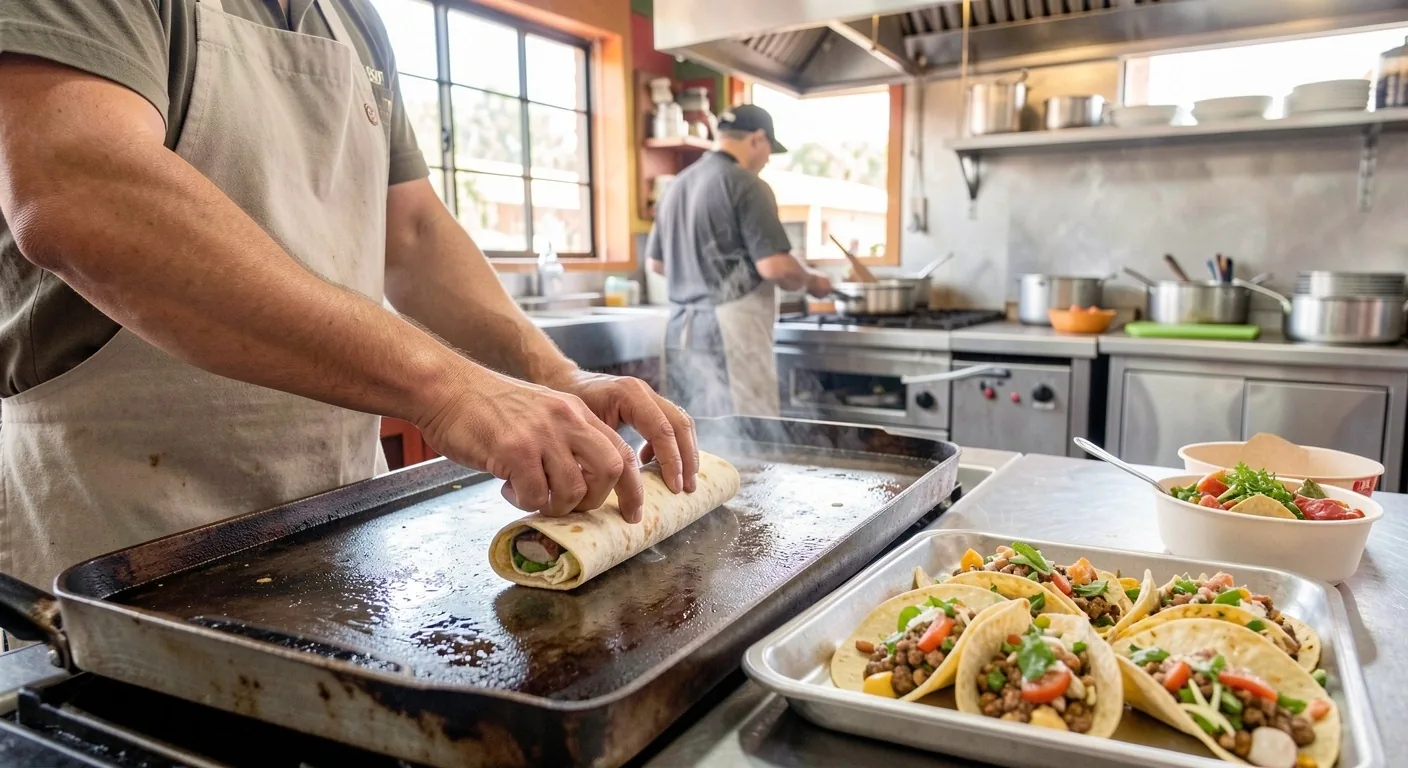
A burrito is wrapped, dense and self-contained, which is why it is the item most orderers default to when the trip is long. Heat stays inside the tortilla instead of escaping into the bag, and the fillings do not separate the way a plated dish would. If your zone's estimated delivery time sits near the top of the range, this is the format that forgives the wait.
Add salsa on the side and the flavour still lands. The tortilla acts as its own insulation layer, trapping steam against the rice and protein so the core temperature drops more slowly than any open format. For a 45 to 60 minute run, the burrito is the structural choice — not because it tastes better, but because it arrives closer to how it left the kitchen.
One practical note: a foil-wrapped burrito holds heat longer than a naked one, so if your store offers both, pick the foil for longer zones and the naked for shorter ones where you plan to eat immediately.
Bowls and how they handle heat
They keep their components visible, and a lidded bowl holds temperature well over a short run.
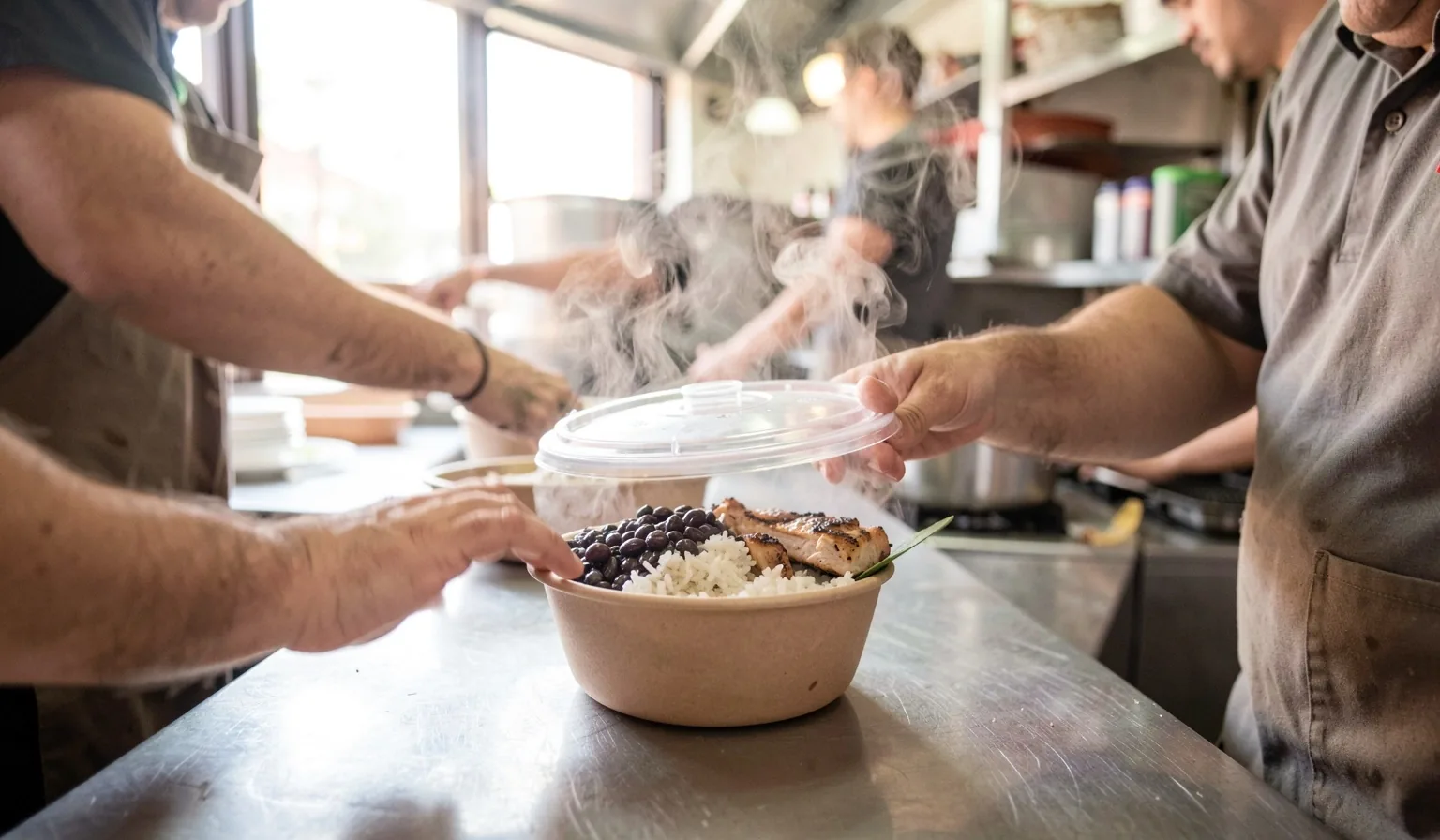
Bowls travel differently from burritos. They keep their components visible, so rice, beans, protein and toppings stay distinct, and a lidded bowl holds temperature well over a short run. The risk is moisture: wet toppings can soften rice at the base if the trip runs long.
A bowl is a good middle choice when you want the same fillings as a burrito but prefer to see what you are eating. On a 35 to 50 minute delivery, it usually arrives in good shape. The lid traps steam without crushing the contents, and because nothing is wrapped under pressure, the layers do not compress into a single texture the way a long-haul burrito sometimes does.
If you are ordering a bowl for a longer run, ask for wet toppings — salsa, sour cream, guacamole — on the side so you control when they meet the rice. That single adjustment extends the bowl's useful window by a noticeable margin.
Tacos and the honest limit
Tacos are the weakest delivery item on any Mexican menu, and it is worth saying so plainly. A soft shell absorbs moisture and firms up as it cools; a crisp shell loses its snap within minutes. They are still worth ordering when your estimated time is short and the kitchen is close, and they remain the best expression of the food when you eat in. If you want the taco experience delivered, treat it as a short-trip item, not a long-haul one.
Nachos, sides and the assembly problem
Nachos fail for one reason: the chips meet the wet ingredients too early. Ordered for delivery, nachos reward a short trip and a store that packs components separately. Sides like guacamole and chips travel cleanly because nothing needs to stay hot, and they fill out an order without adding fragility.
If nachos are the point of your order, check the estimated delivery time first and consider pickup, when the assembly is still fresh. The structural problem is simple physics — a tortilla chip is engineered for snap, and snap is a function of moisture content. Once cheese, salsa and beans land on the chip, a timer starts. At ten minutes the chip still has texture at the edges. At thirty minutes it has absorbed enough liquid to become a different food entirely.
Some stores will pack the chips and the wet components in separate containers if you ask. That is the single most useful customisation for a nacho order, and it extends the useful eating window significantly. If the store does not separate them, the format defaults to a short-trip item.
Sides that do not depend on heat extend an order without adding fragility.
Salsa, hot sauce and the customisation dial
Salsa is not an afterthought in Mexican delivery. It is the clearest signal of freshness and the main lever customers use to judge whether a chain tastes authentic or generic.
Hot sauce does a different job: it lets you set the heat without changing the base item, so two people ordering the same burrito get different meals. Adding both as separate items is the simplest way to protect your order from arriving at a spice level you did not choose.
Acidity and freshness; the flavour you taste first.
Heat control added at the table, not in the kitchen.
Heat and flavour are different levers; keep both in your hands.
Building an order for a longer delivery time
The wrap holds heat and structure where a taco shell breaks down.
A lidded bowl keeps components together and traps steam.
Nothing needs to stay hot, so nothing degrades in transit.
Keep heat and texture under your control at the other end.
When your zone shows a longer estimate, order for durability. This is not about avoiding the menu; it is about matching the format to the distance between the kitchen and your door. A burrito that excels on a 25-minute run is the same burrito that disappoints on a 55-minute one — the menu did not change, the trip did.
What freshly made means for delivery
Freshly made is a claim about the kitchen, not the courier. The food is assembled when the order is prepared, then handed over, and the trip from there is the variable nobody controls.
That is why the zone estimate matters more than the brand name on the bag. A short zone with a busy kitchen can beat a long zone with an idle one. The kitchen's output and the courier's route are separate systems, and only one of them is visible to you at the point of ordering. Judge the estimate, not the marketing.
If the app shows a 35-minute window, plan for 40. If it shows 50, plan for 60. The buffer is not pessimism — it is the difference between opening a bag of food that still has structural integrity and opening one that has passed its useful window. The freshly-made claim is real at the pass; your job is to make sure the trip does not undo it.
Vegetarian and lighter options in a delivery order
The same menu, read for distance.
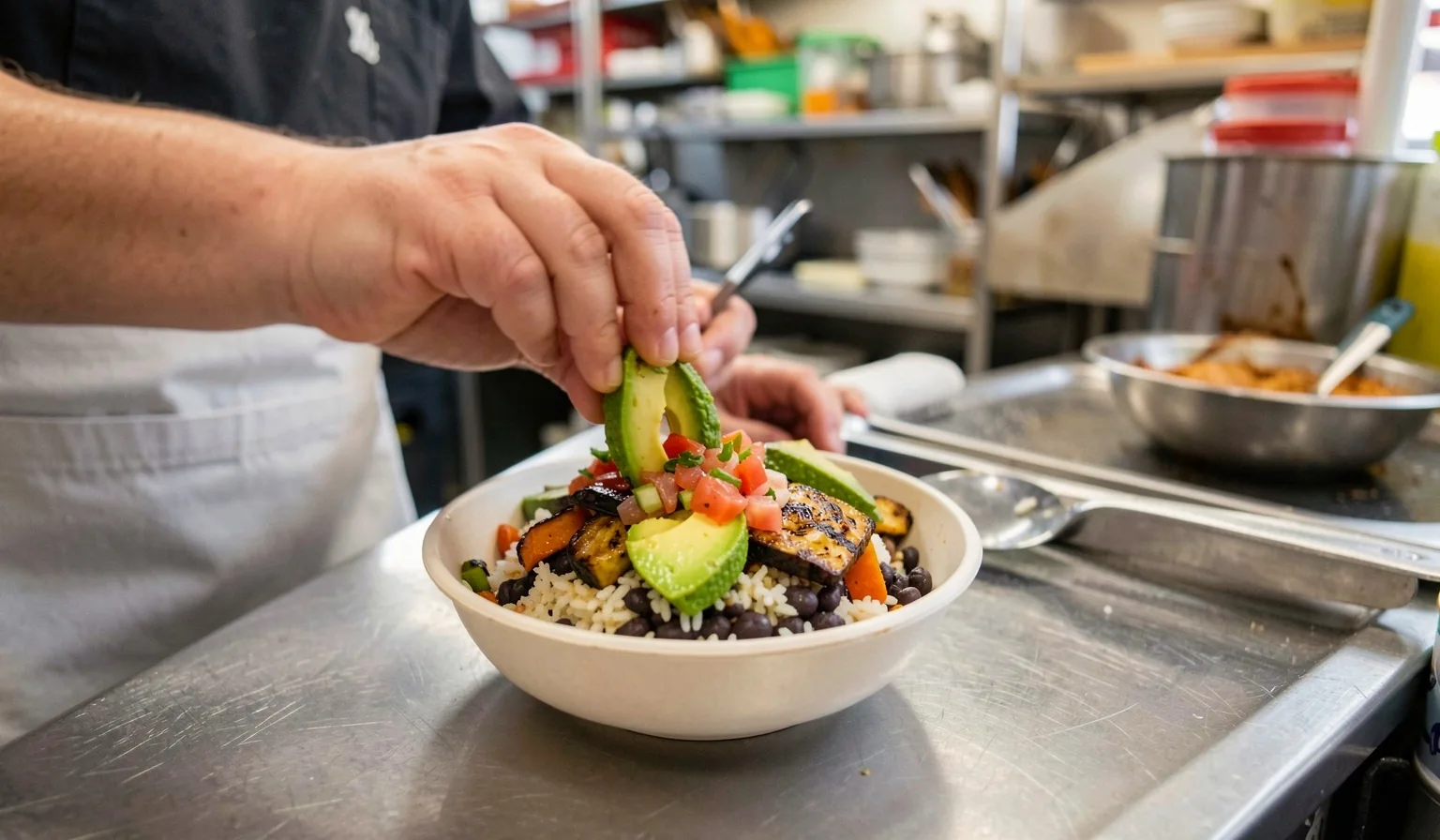
Not every delivery order needs to be a heavy burrito. Bowls built around rice, beans and vegetables travel as well as their meat counterparts and often better, since there is less fa to congeal on cooling. Guacamole and chips sit outside the hot-food problem entirely. Salsa brings acidity that a long trip tends to flatten, so a lighter order benefits from extra salsa on the side more than a heavy one does.
A vegetarian bowl with rice, black beans, fajita vegetables and extra salsa is one of the most durable items you can order for a long zone. The components are individually stable, the absence of meat fa means nothing congeals as the temperature drops, and the salsa restores the brightness that transit steals. It is the same menu, read for distance.
- No meat fa to congeal on cooling
- Rice and beans hold texture at room temperature
- Salsa restores acidity lost in transit
Drinks, extras and what not to add
Drinks add weight and spill risk to a delivery bag and are usually cheaper to buy on the way. Extra tortillas, sides and sauces are the opposite: they are light, they travel well, and they extend an order without adding fragility. Add salsa and hot sauce as items rather than assuming defaults. Skip anything that needs to be hot and crisp at the same time, because that combination does not survive a courier.
Reading the menu against your zone
The delivery menu and the delivery zone page belong together. A burrito that arrives well on a 35 to 50 minute Bayside run is the same burrito that suffers on a 45 to 60 minute wider south-east run, and the only thing that changed is the distance.
Before you order, look at the estimated delivery time for your postcode, then choose the format that suits it. The menu is the same across channels; the trip is not. A taco ordered for a 15-minute zone is a different experience from the same taco ordered for a 50-minute one, and no amount of kitchen quality closes that gap.
The practical version: open the zone page, find your suburb, read the estimate, then come back to this menu and pick the format that matches. It adds thirty seconds to your order and changes what arrives at your door.
Ordering for a group without losing the food
Group orders tend to include one item for everyone, and the fragile choices are usually the ones that fail. Build a group order around burritos and bowls, add chips and guacamole as shared sides, and keep salsa and hot sauce separate so each person sets their own heat.
Avoid stacking multiple taco orders into a long trip. One person's taco preference should not decide how the whole order travels. If someone in the group insists on tacos, route them to pickup or choose a store within a short delivery window so their choice does not compromise the rest of the bag.
Customisation that actually changes the meal
Protein, rice, beans and salsa are the levers that change a Guzman y Gomez order most, and all four are set at the kitchen rather than in transit. Hot sauce is the only heat control you retain after dispatch.
If you are ordering the same item repeatedly, changing the salsa is the cheapest way to make it taste like a different meal. That is the practical reason condiments matter more in delivery than in dine-in service — you cannot send a dish back from thirty minutes away, so the choices you make at the point of order are the choices you live with.
The four kitchen-set levers — protein, rice, beans and salsa — define the meal's foundation. Hot sauce sits on top of that foundation as the only post-dispatch control, which is why it deserves its own line item rather than being assumed as a default. Treat it as a separate order, not a setting.
Check the estimated delivery time for your suburb before you pick a format.
Check your delivery zoneWalk through the full ordering process, from app to courier to door.
See how ordering works